
Proven Clinical, Operational, and Economic Benefits
Backed by scientific evidence for mood disorders,including severe depression and bipolar disorder, with measurable outcomes across clinical care, operational efficiency, and economic impact.
Clinical Benefits
From reactive to proactive monitoring: improve patients’ depression, mania, and quality of life.

18-26 %
of improvement of the depression symptoms ¹
37%
of improvement of the maniac symptoms ²
39%
of improvement of the QoL ²
60%
treatment continuity >90 days ³

See sources

1 - Lauritsen et al. 2012
2 - Li et al 2024
3 - Simon et al 2006
Operational Benefits
From fragmented monitoring to seamless organization: simplify daily workflows for care teams and improve care coordination

Reduce
Administrative burden by optimizing consultations and limiting time-consuming patient interactions.
Improve
Care coordination and time repartition between HCPs around the patients.
Optimize
Consultations with structured health reports focused on pre-collected, objective data.
See sources
1 - Lauritsen et al. 2012
2 - Li et al 2024
3 - Simon et al 2006
Economic Benefits
From complex processes to a streamlined approach: improve operational efficiency and optimize resource allocation.

Optimized
Ressource allocation
Scalable
Across care teams and facilities
See sources
1 - Lauritsen et al. 2012
2 - Li et al 2024
3 - Simon et al 2006
Built for Every Stakeholder in Psychiatry Care
Addressing everyone involved in the patient journey — from clinicians to patients themselves.

Detect clinical events and proactively identify at-risk patients to optimize care delivery
Get a clear, structured Health Report to prepare for each consultation with confidence
Make more informed treatment decisions using real-world data on efficacy, tolerability, and adherence
Streamline coordination with other healthcare professionals for truly integrated care
.webp)
An interface to monitor patients health in real time with comprehensive oversight capabilities
Streamline patient follow-up with intuitive, time-saving tools
Strengthen city-hospital collaboration for seamless continuity of care
Support personalized care pathways tailored to each patient’s needs
Highlight and enhance nursing expertise at the heart of patient care

Keep patients engaged and supported from home
Access a clear, structured Health Report to prepare and focus consultations more effectively
Facilitate referrals to other healthcare professionals when additional support is needed

Keep patients engaged and supported from home
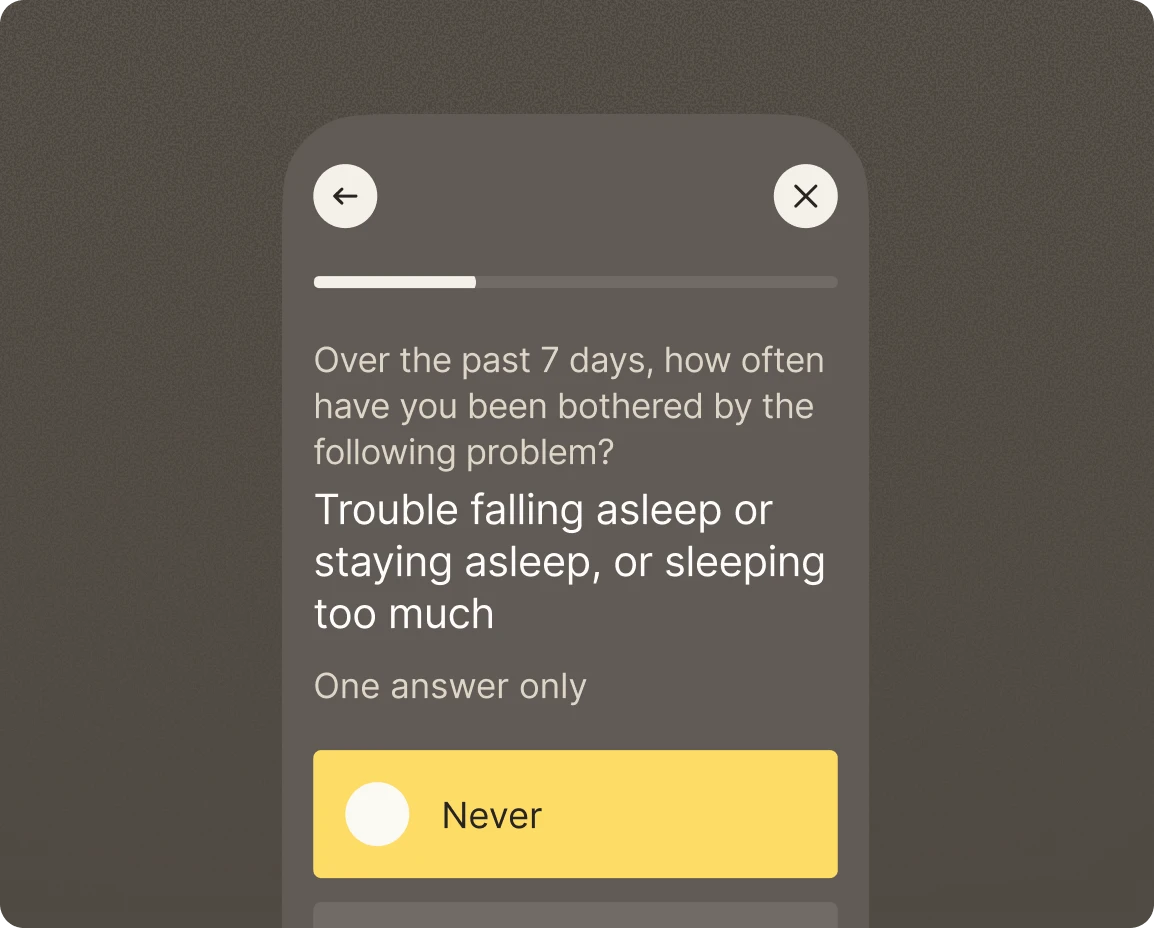
Easily report symptoms like mood and anxiety through validated tools (PHQ-9, GAD-2, etc...)
Share quality of life insights and social factors that matter to their care
Receive personalized care based on their needs and real-time feedback
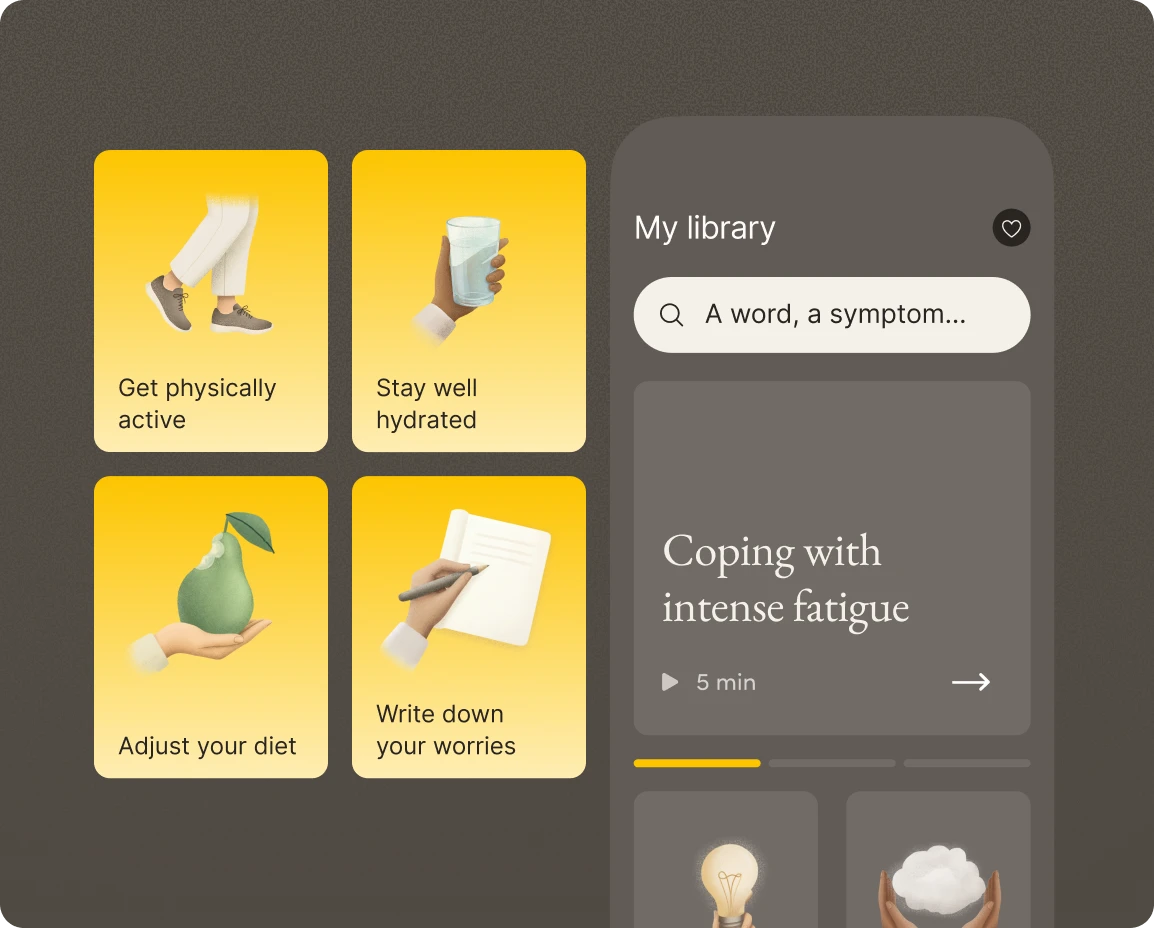
Access tailored psycho-éducation content to better understand and manage their condition
See sources
1 - Lauritsen et al. 2012
2 - Li et al 2024
3 - Simon et al 2006
Features designed for Psychiatry
Our solution supports the follow-up of patients with moderate-to-severe depressive episodes or bipolar disorder - in hospital settings and in private practice.

.png)
A pathway for every clinical situation in psychiatry
Our solution fits your organisation, whether you work in inpatient, outpatient, or private practice settings.
Private outpatient practice

Stay connected with your patients between appointments, wherever you practise.
Receive structured data on symptom severity, treatment tolerance and adherence between two appointments.
Detect early mood fluctuations and warning signs of depressive or manic relapse.
Walk into every consultation with a longitudinal view of each patient's progression.
Encourage your patients to stay engaged in their follow-up with psychoeducation content accessible between consultations.
Community mental health centre (CMHC)
Coordinate care and strengthen continuity of follow-up between each visit.
Share a common clinical record across psychiatrists, psychologists, nurses and nurse practitioners.
Adjust care plans as a team between consultations, without waiting for the next meeting.
Identify patients at risk of dropping out before they disengage from care.
Optimise appointment scheduling based on each patient's real clinical progression.
Inpatient care & post-discharge follow-up
Secure the transition and detect the first signs of relapse as soon as patients return home.
Extend clinical follow-up beyond hospitalisation with regular at-home self-assessments.
Detect signs of relapse during the transition phase — the highest-risk period.
Secure treatment adherence after discharge through real-time observance tracking.
Maintain the link between the hospital team and outpatient follow-up.
Day hospital (partial hospitalisation)
Assess clinical progress between sessions and optimise every therapeutic programme.
Track symptom progression across the full programme in real time.
Complement clinical observation with patient-reported data collected between sessions.
Reinforce patient engagement outside of scheduled attendance time.
Optimise programme planning based on each patient's individual clinical evolution.
EC-102
Ongoing Multicenter Randomized Trial
We are conducting the EC-102 study in order to generate robust evidence on the clinical, organizational and economical impact of the Resilience Psychiatry remote monitoring solution. The primary endpoint is the response to treatment measured by MADRS.

50 sites
Involved in the study. Hospitals, Private Clinics, liberal practionners involved in the study

594 patients
enrolled and randomized into two groups: remote patient monitoring vs. usual care.










What our Users Say
Real feedback from healthcare professionals and patients using our solutions daily.
"I believe that any tool helping us to better understand our patients, stay more connected with them, and more accurately analyse what is happening, will be essential to bring medicine back to the heart of psychiatry - while preserving what makes our discipline unique: the human connection."
"The questionnaire helps me take a step back and look at my condition, better understand my mood swings, and prevent certain warning signs. The questions and recommendations are specific, and I feel truly listened to and understood. It's both reassuring and structured, like a common thread between appointments with my healthcare team."
*Satisfaction survey conducted by Resilience among caregivers & patients using the solution - December 2024.

.webp)